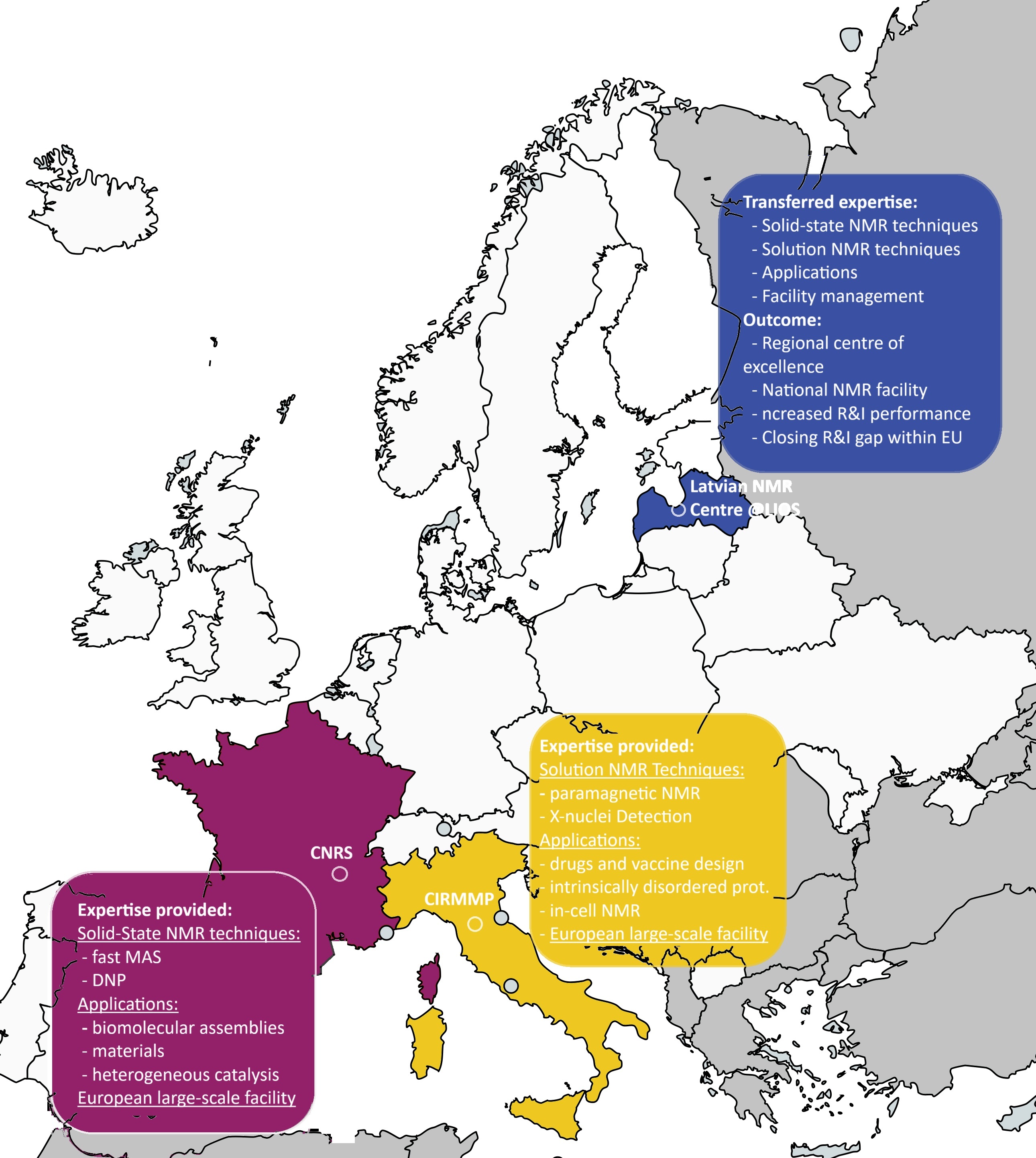
The project, titled Development of Magnetic Resonance in Latvia (MR LATVIA), is being carried out in partnership with the Centre de RMN à très hauts champs de Lyon (CRMN) in France and the Centro Europeo di Risonanze Magnetiche (CERM/ CIRMMP Infrastructure) in Florence, Italy. It is funded under the HORIZON-WIDERA-2023-ACCESS-02 programme, which aims to promote scientific collaboration and innovation across Europe.
The aim of the MR LATVIA project is to establish a regional centre of excellence in nuclear magnetic resonance (NMR) at the Latvian Institute of Organic Synthesis (LIOS), with a special focus on NMR applications in (bio)pharmaceuticals research. By linking the coordinating institution with two top-class European NMR centres (and facilities), Centre de RMN à Très Hauts Champs in Lyon and Consorzio Interuniversitario Risonanze Magnetiche di Metallo Proteine in Florence, the project aims to create a national NMR core facility, enhance the research and innovation performance of LIOS, raise the research profile of its staff as well as strengthen its research management and administrative capacities. The transfer of expertise from the advanced partners to LIOS will be achieved through inter-institutional seminars, organisation of scientific events (workshops, summer schools and a conference), short-term visits, on-the-job training of LIOS early-stage researchers during long-term secondments, and implementation of a joint research project. As a result of this project, LIOS will develop as a regional NMR hub involved in strategic networking activities with two leading NMR European facilities and integrated into the broader European network of NMR research infrastructures. Through providing access to NMR instrumentation and expertise the developed research excellence will be further spread across Latvia and the whole Baltic see region, thereby contributing to closing of the research and innovation gap within Europe.
Key Facts
The MR LATVIA consortium unites leading solid-state NMR infrastructures across Europe to provide open access for researchers from both academia and industry. The European partners include CNRS (France), CERM-CIRMMP Research Infrastructure (Italy) and LIOS (Latvia).

Meet Our Experts
CNRS
Guido Pintacuda
BIO
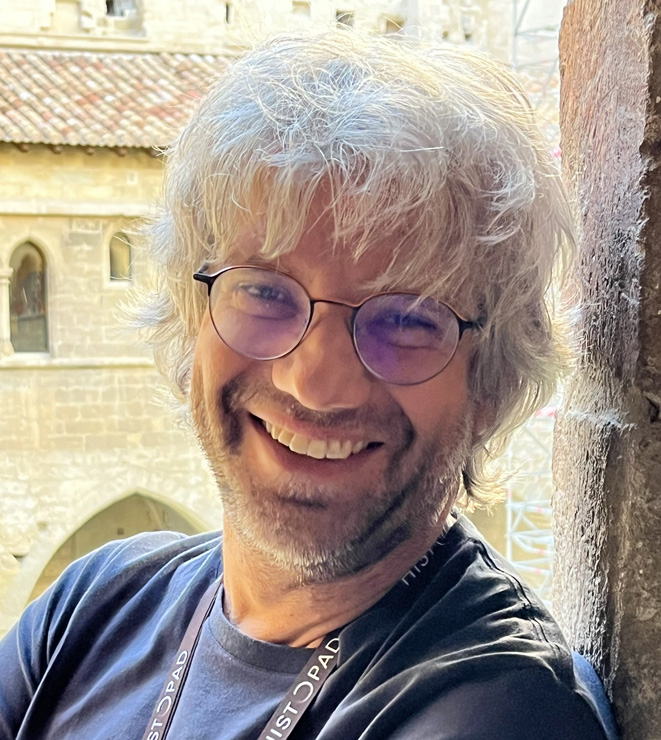
Guido Pintacuda graduated in Chemistry from the Scuola Normale Superiore in Pisa (1997) and completed his PhD there in 2002. He worked with Prof. Otting in Stockholm and Canberra, and with Prof. Emsley in Lyon, where he became CNRS Research Director in 2009. He leads a group developing NMR methods for biological solids and paramagnetic materials and has directed the Lyon High-Field NMR Center since 2019. Guido has coordinated several national and European projects, including an ITN on paramagnetic NMR, an ERC consolidator grant on paramagnetic membrane metalloproteins, and the PANACEA consortium, which provides chemists across Europe with training and access to solid-state NMR instrumentation.
Motivational Quote
My passion for dancing spins: A 25-year delay, but no sign of decay!

Anne Lesage
BIO
Anne Lesage was born in 1969 in the small wine-producing town of Condrieu. She is currently working at the High Field NMR Center in Lyon, France, where she heads a group working on hyperpolarized solid-state NMR. She received a PhD in biophysics in 1994 and her habilitation to direct independent research in 2003. With her background as an engineer and her interdisciplinary experience, Anne Lesage has assumed a role of technical support and development while asserting a scientific position of the highest order. She notably contributed to set up the High field NMR Center (CRMN) in Lyon around the installation of the first 1 GHz NMR spectrometer worldwide. From 2013 to 2022, she has been at the head of the National High-Field NMR Infrastructure in France, first as Deputy Director and then as Director. On a European level, she has been a founding member of the Alpine Conference on Solid-State NMR, which has contributed greatly to instilling a spirit of creativity and dynamism in the entire community. She is currently co-coordinating PANACEA, a European Infrastructure project aiming at providing access to cutting edge instrumentation and experiments in solid-state NMR, gathering twelve international partners. On the scientific levels, Anne Lesage has been at the initiative of many developments that have marked the solid-state NMR community. She is known for her contributions to the development of scalar-based solid-state NMR methods. Anne Lesage has also been a major actor in the development of Dynamic Nuclear Polarization (DNP) in solids. Notably Anne and her collaborators pioneered the application of this approach to the characterization of functionalized surfaces. Her recent work includes implementation of innovative strategies to selectively probe the three-dimensional structure of supported organometallic catalysts in complex, multisite environments. Her experience in the management of Research Infrastructures both at the national and European level will be a plus in the implementation of MR LATVIA.
Motivational Quote
Shoot for the moon. Even if you miss it you will land among the stars. Norman Vincent Peale
CERM/CIRMMP Research Infrastructure
Roberta Pierattelli
BIO
Francesca Morelli
BIO
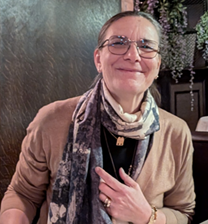
Francesca Morelli is the Director of CIRMMP and Senior Project Manager for the CERM/CIRMMP research infrastructure. Since 2010, she has managed access activities at the infrastructure and has actively participated in more than fifteen European and national research projects. Her focus has been particularly on coordination and networking activities, and she has co-authored several resulting public documents. Her decade-long active involvement in Instruct-ERIC, the distributed European infrastructure for structural biology of which CERM/CIRMMP is the Italian centre, has provided her with deep knowledge of the EU and national research infrastructure ecosystem and the ongoing activities within the field of Structural Biology and beyond.
LIOS
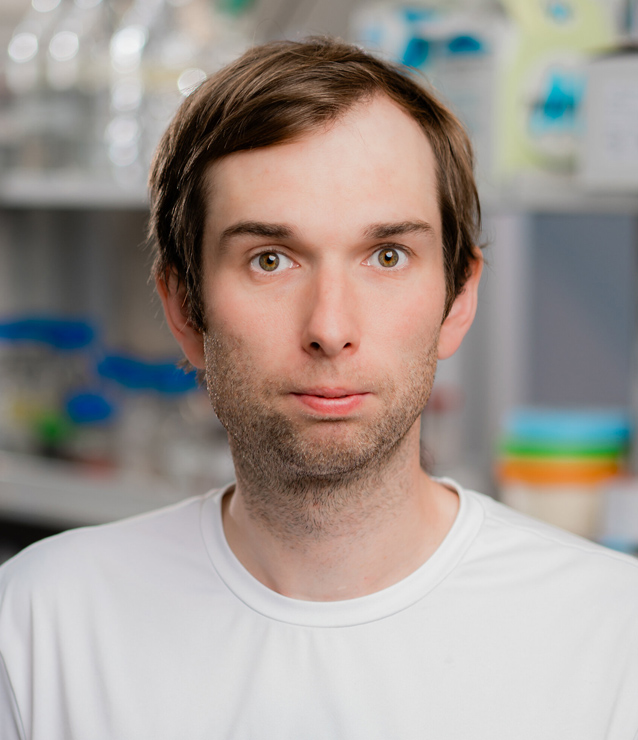
Alons Lends
BIO
Dr Alons Lends completed his PhD in 2019 at ETH Zurich, Switzerland under the guidance of prof. Beat H. Meier and Dr.Anja Böckmann. He then received and SNF postdoctoral fellowship to continue his research in Dr. Antoine Loquet's group in Bordeaux, France. In late 2021, he returned to LIOS in the position of a researcher and was promoted to Head of Laboratory of the Physical Organic Chemistry. His main research interest are solid and liquid state NMR spectroscopy methodology and applications for biomolecular systems.
Motivational Quote
"You miss 100% of the shots you don't take" (Wayne Gretzky)

Kristaps Jaudzems
BIO
Prof. Kristaps Jaudzems (male, H-index=24, ~2200 citations) obtained his PhD in chemistry in 2011 from Riga Technical University, having spent two years at the Scripps Research Institute as an external graduate student with Nobel Prize winner Prof. Kurt Wüthrich focusing on solution NMR methods for structural genomics. Subsequently, he was senior researcher at LIOS. In 2015 he moved to the CRMN in Lyon, where he worked as a Marie Skłodowska-Curie fellow on ssNMR methods development employing fast MAS, proton detection and DNP for viral capsid structural studies. The PhD and postdoctoral training allowed him to develop a strong expertise in biomolecular NMR (both solution and solid-state), and in 2017, he established an independent research group at LIOS to carry out research on NMR-based structural biology and drug discovery. In 2018, he was additionally appointed as an associate professor at the University of Latvia and in 2021, promoted to professor.
Meet Our Team
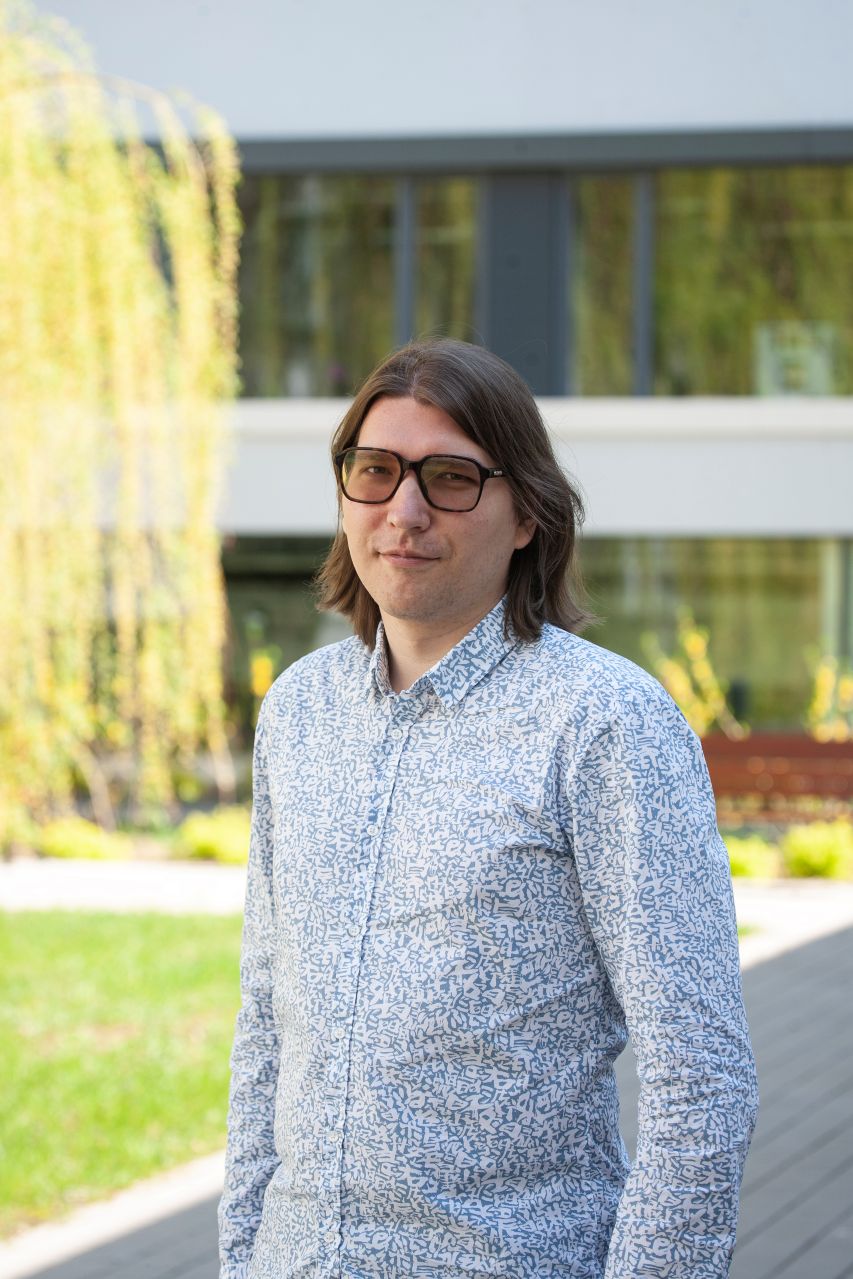
Ruslans Muhamadejevs
BIO
Ruslans Muhamadejevs received a Bachelor’s degree in Chemistry and a Master’s degree of Engineering Science in Nanotechnologies and a PhD degree in Chemistry from Riga Technical University in 2010, 2012 and 2023, respectively. Since 2007, he has worked in the Laboratory of Physical Organic Chemistry of the Latvian Institute of Organic Synthesis, focusing his research on nuclear magnetic resonance (qNMR, small molecules, liquid NMR) and computational chemistry. He has co-authored 18 original publications indexed in Scopus and Web of Science databases. Currently, he is a Researcher in the Latvian Institute of Organic Synthesis.
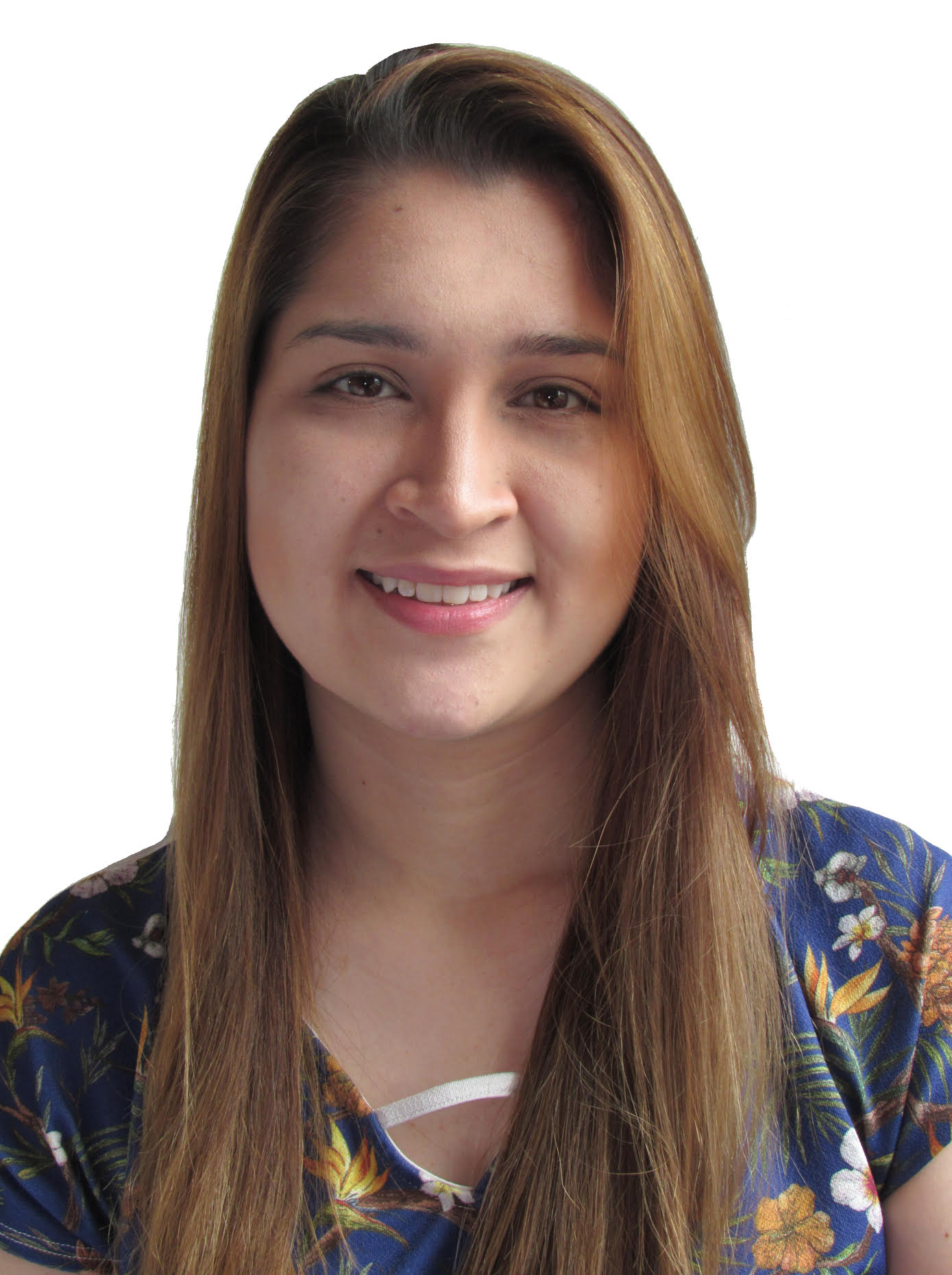
Diana Nīno Avellaneda
BIO
Diana is a Biological Engineer and Master in Biotechnology from the Universidad Nacional de Colombia. Her master’s research explored the antitumoral activity of bacterial metabolites, combining bacterial isolation, fermentative extract preparation, cytotoxicity and genotoxicity assays, and spectroscopic characterization. During the COVID-19 pandemic, she expanded her skill set in cytogenetics while working at two diagnostic laboratories in Medellín, Colombia. Now pursuing a PhD, Diana is developing advanced expertise in NMR spectroscopy for the characterization of virus-like particle (VLP) vaccine platforms, with applications spanning immunogenicity and neurodegenerative disease research.
Outside the lab, Diana enjoys music (as a flute player), skating, and building community.

Alvis Zvirgzdins
BIO
Alvis is a passionate researcher with a strong commitment to scientific discovery. After a ten-year break from academia, he has returned to research with renewed energy and curiosity, currently pursuing a PhD focused on advancing biomolecular analysis through solid-state NMR methods. His PhD thesis centers on ¹H and ¹⁹F-detected solid-state NMR spectroscopy under fast magic-angle spinning, integrating experimental optimization with theoretical insight to enhance analytical performance and precision.
Beyond research, Alvis has been actively engaged in his local community, organizing music events in Taurene, Latvia. Prior to relocating to Lyon, he and his wife operated Pizzeria Meistars un Margarita.
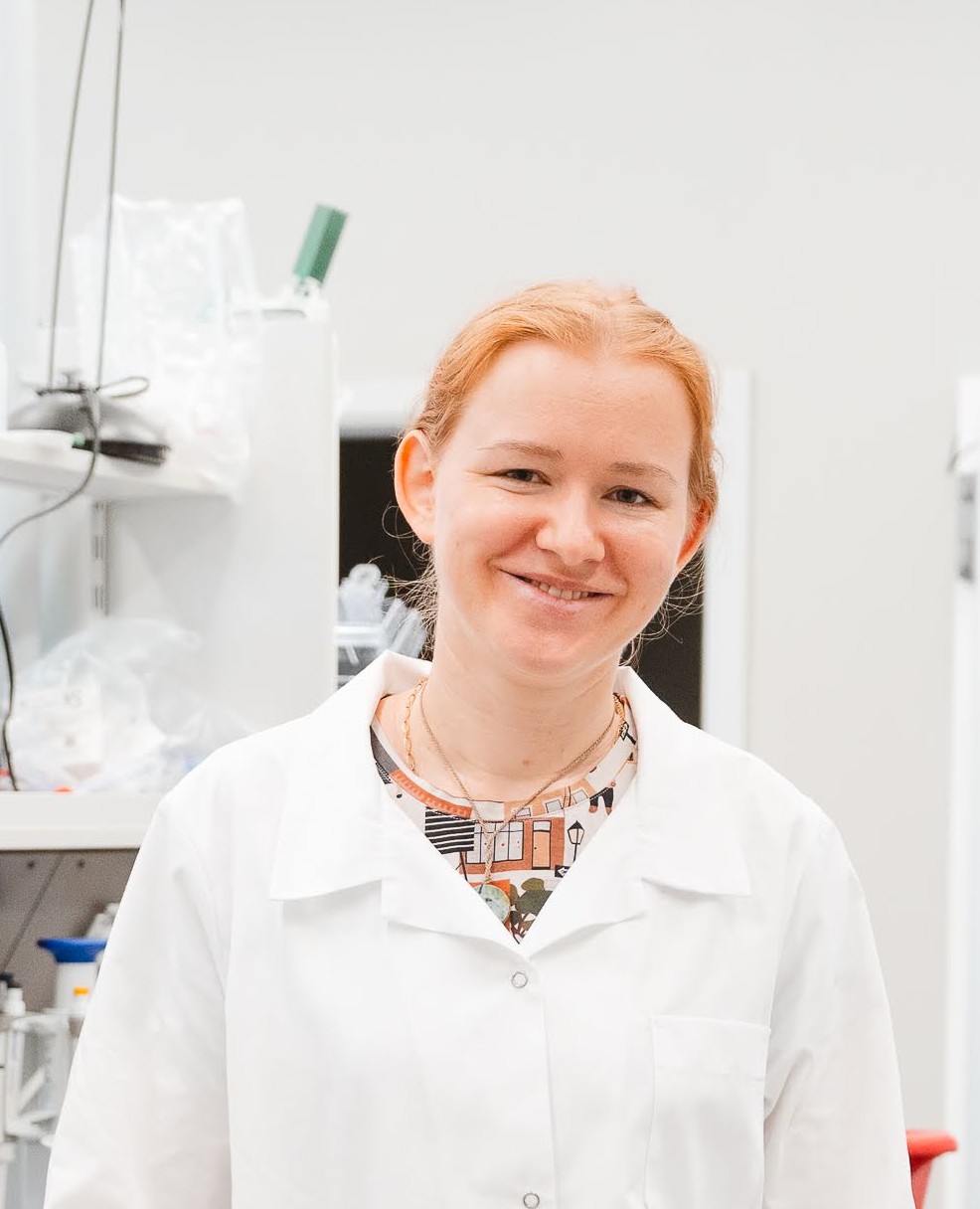
Kristine Senkane
BIO
Kristine Senkane is a chemical biologist who obtained her Masters in Chemical Biology from the Scripps Research Institute where her research focused on chemical proteomics. Currently she is pursuing her PhD in Biology at the University of Latvia and performing her research at LIOS. Her thesis aims to elucidate the structure of non-repetitive domains in spider silk fibers using solid-state NMR in an effort to gain insights into the structural demands and limitations of spider silk fiber formation and properties. Outside of work she sings in a choir, hikes around Latvia and occasionally ventures on adventures all over the world.
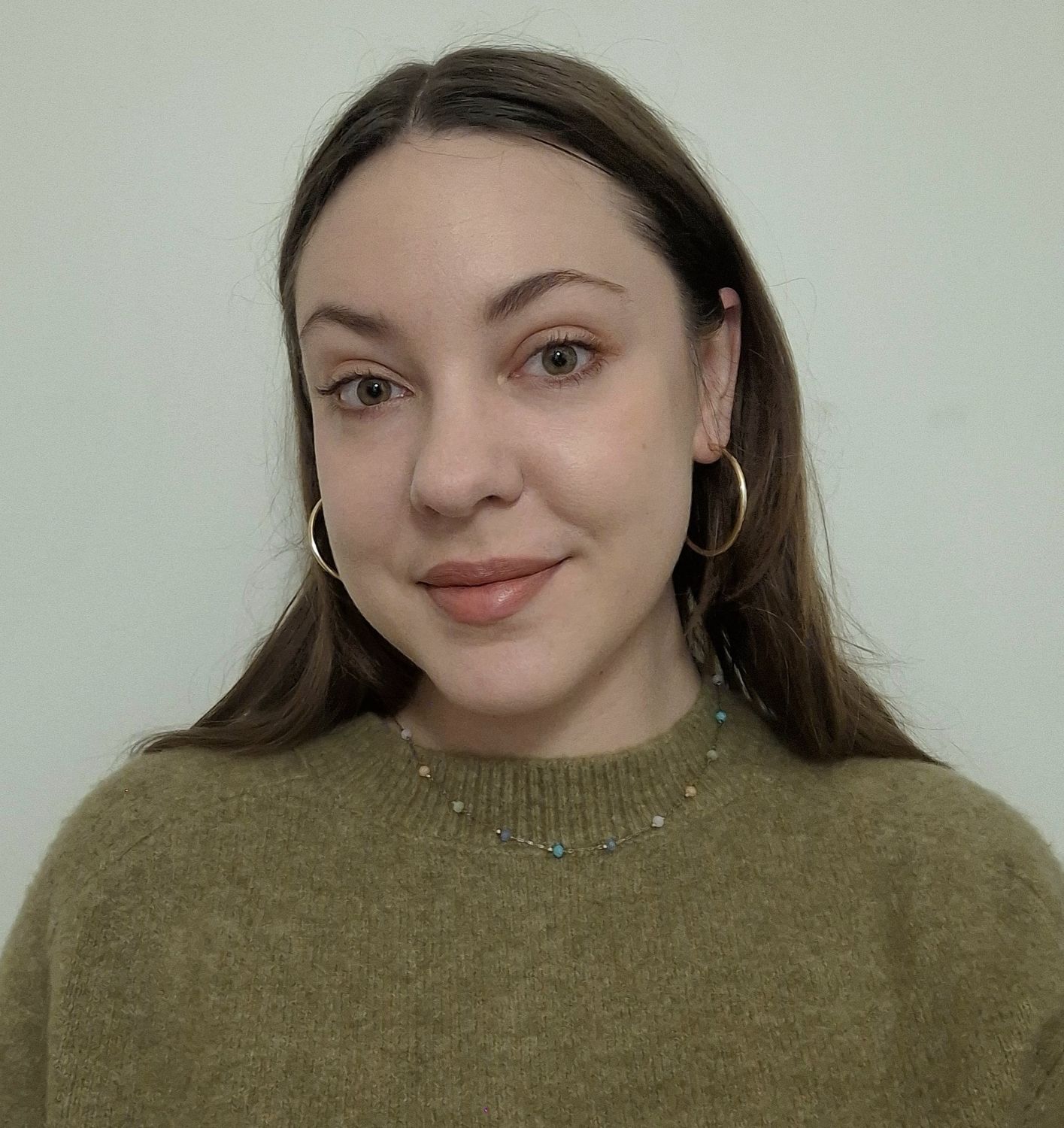
Jana Petkus
BIO
Jana Petkus obtained her Bachelor’s degree (2018) and Master’s degree (2020) in Chemistry at the University of Latvia. She later expanded her academic background by earning a second Master’s degree in Biomedicine (2025) at Riga Stradiņš University. In 2025, she began her PhD studies at the University of Latvia. Her doctoral research focuses on structure determination of challenging heterogeneous biomolecular systems, employing solution and solid-state NMR spectroscopy.
In her free time, Jana has been active in various Latvian bands since 2015. She currently plays in the alternative rock band NIKTO and the noisy shoegaze band Pretplūsma. She also enjoys analog black and white photography.
Platform map
The MRLATVIA consortium unites leading solid-state NMR infrastructures across Europe to provide open access for researchers from both academia and industry. The European partners include CNRS (France), CERM/CIRMMP Research Infrastructure (Italy) and LIOS (Latvia).