

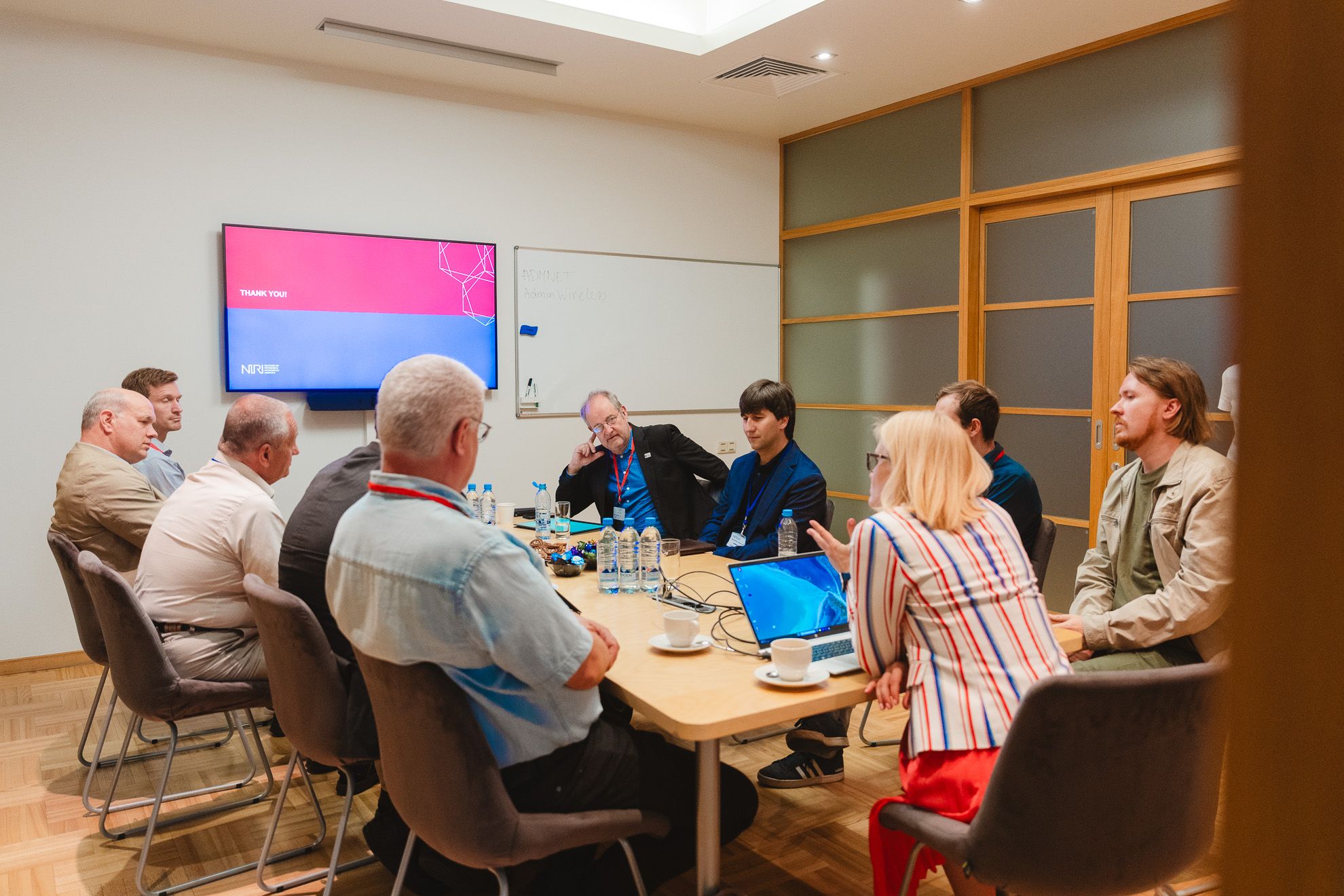
On 8 June 2026, the External Advisory Board (EAB) of the MR LATVIA project met in Riga to review the project's progress and discuss future directions for strengthening magnetic resonance (MR) research, innovation and education across the Baltic region.
A central theme of the meeting was the importance of building a strong Baltic network for MR research. The Advisory Board recognised that MR LATVIA is already generating benefits beyond Latvia, with growing engagement from both Estonia and Lithuania. Board members emphasised that closer cooperation, shared expertise and stronger personal connections between researchers will be essential for establishing a sustainable regional ecosystem for advanced magnetic resonance technologies.
The discussions also focused on scientific collaboration and research infrastructure. While expertise exists across the Baltic States, access to advanced NMR instrumentation remains uneven. The Board welcomed plans for new instrumentation and highlighted the importance of researcher mobility, secondments and joint scientific projects to maximise the impact of existing and future facilities. Positive feedback received from an independent scientific expert further confirmed the project's strong scientific direction and implementation strategy.
Education and capacity building were identified as key priorities for the next phase of the project. The Advisory Board acknowledged the ongoing teaching activities delivered by Alons Lends through guest lectures and collaborations with universities in Latvia, Estonia and Lithuania. Members proposed expanding these efforts by creating a coordinated Baltic teaching network, allowing universities to jointly offer specialised online lectures and courses in English. Such an initiative would strengthen knowledge exchange and increase access to high-quality education throughout the region.
Another important topic was the development of high-value analytical services and the promotion of the consortium's scientific excellence. The Board highlighted the project's strengths in quantitative NMR, pharmaceutical applications, protein NMR and emerging precision medicine approaches. Members encouraged the consortium to continue strengthening collaborations with leading European partners while increasing the visibility of its unique expertise and pursuing additional funding opportunities.
Engagement with industry also featured prominently in the discussions. The Board recommended strengthening communication with industrial stakeholders through regular outreach activities and presentations tailored to non-specialist audiences. Building long-term relationships with industrial partners and understanding their analytical needs were identified as important steps towards increasing the societal and economic impact of the project.
Looking ahead, the Advisory Board identified several promising research directions, including NMR-based metabolomics, the integration of machine learning with NMR data analysis, and the development of joint Master's thesis projects across the Baltic region. At the same time, members highlighted that continued investment in highly qualified personnel, including researchers and technical specialists, will be essential for ensuring the long-term sustainability of MR LATVIA.
The meeting concluded with very positive feedback from the External Advisory Board, which congratulated the consortium on the progress achieved to date. Members recognised MR LATVIA as an initiative with strong potential to become a leading Baltic centre of excellence in magnetic resonance research, education and innovation, while continuing to strengthen collaboration within the European Research Area.